

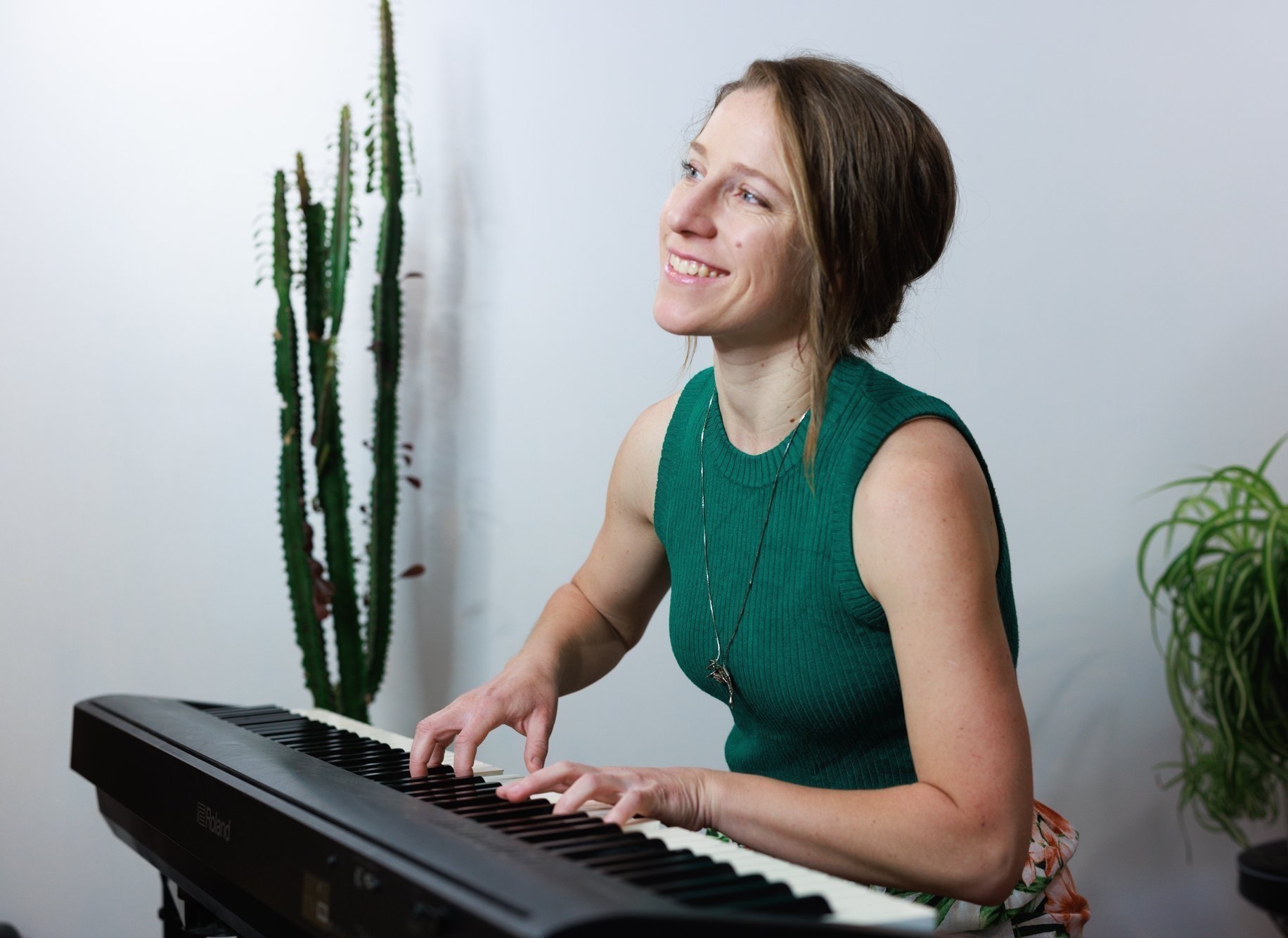
Online piano lessons
For students who actually want to get good—and enjoy it.
Adults ready to play confidently.
Parents who want structure and measurable growth for their kids.

Most piano students waste years going nowhere
They show up every week. They practice (sometimes). They play through pieces their teacher assigns.
But after a year, they still can't sight-read. They avoid certain songs. They don't understand what they're doing.
Their playing hasn't changed. Their confidence hasn't grown. They can't explain what they've actually learned.
The problem isn't talent. It's not dedication.
It's that no one gave them a real plan.
So they drift. Practice becomes optional. Progress stops being measurable. At some point, they quietly stop calling themselves a piano student.
That shift happens when there is no direction.
And when there is no direction, people stop moving.
Most piano lessons fill time. These ones build a path.
In many lessons, you play, get some notes, and go home.
It feels like progress, but after a while, it is hard to explain what you are actually building.
These lessons work differently.
From the start, there is a clear direction.
Each week connects to the next.
What you practise today prepares you for what comes next.
Over time, you stop thinking of yourself as someone who is “taking piano.”
You start thinking of yourself as someone who is a piano player.
This is where piano starts to make sense.
M.Mus., B.Mus.,
CNCM Examiner and Adjudicator
Certified Online Music Teacher
Most people don’t leave piano because they don’t care. They leave because it starts to feel pointless. Like they’re showing up, doing the work, and still not really moving anywhere.
That's why Becky built her studio differently.
Becky is a professional concert pianist and online piano educator who helps students learn to speak music like a language. Her approach blends classical technique with contemporary creativity, shaped by years of performance, improvisation, and close study of how people actually learn.
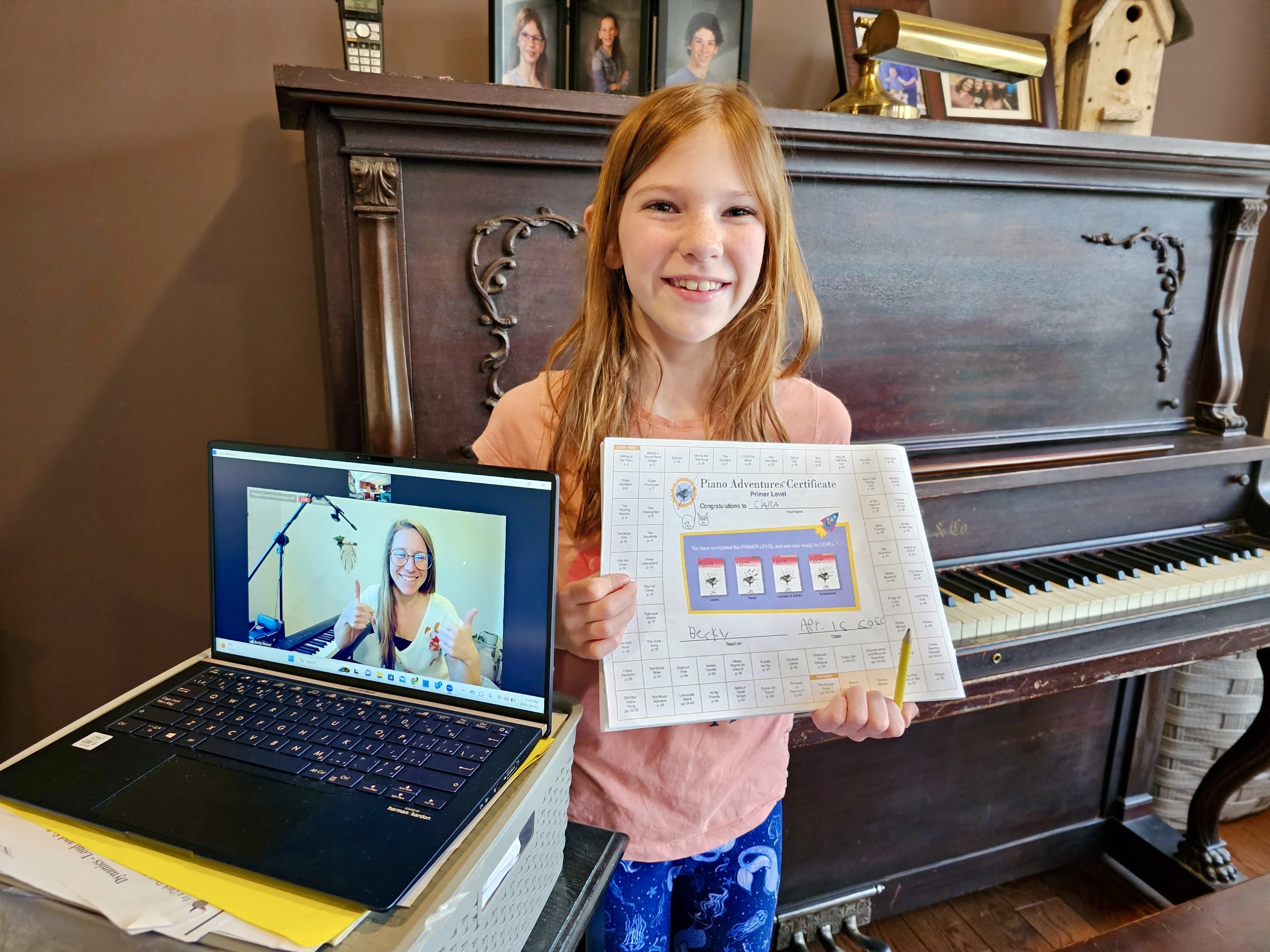
She created her online piano studio in 2019 after discovering something important: virtual lessons don't just work—they can be better than traditional ones. With dynamic multi-camera teaching, collaborative screen sharing, and real-time duet playing, she meets students where they are and helps them produce sound that actually feels good in their hands.
Her work is focused on building real musicianship. Not just getting through pieces.
Lessons that fit your life and still move you forward
These lessons are built for people who want real progress without having to force their life into an unrealistic schedule. You should not have to choose between structure and flexibility. You should not have to sacrifice momentum just because your weeks are busy or change from month to month. This studio is designed so that your piano growth stays steady even when life does not.
Start your lessons in three simple steps

You don’t need to prepare more, research more, or second-guess yourself.
You just need to begin.
1. Book your first call
You talk about what you want from piano and where things feel stuck or unclear. Together, you map out a simple, realistic path forward so you finally know what you’re working toward.
2. Set up your piano space
You get your piano and tech ready in a way that fits your home and your schedule. You leave this step knowing exactly how lessons will run and what your practice will look like.
3. Start playing with direction
Your lessons begin with structure and steady feedback. Practice feels focused instead of scattered. Progress becomes easy to see. Piano starts to feel like something you can rely on again.
Stories from the Studio—
"But I want in-person lessons."
Most people think they do, until they try the online studio.
The online format doesn't replace in-person lessons. For many students, it actually works better.
Multi-camera angles let you see technique from perspectives you'd never get in person.
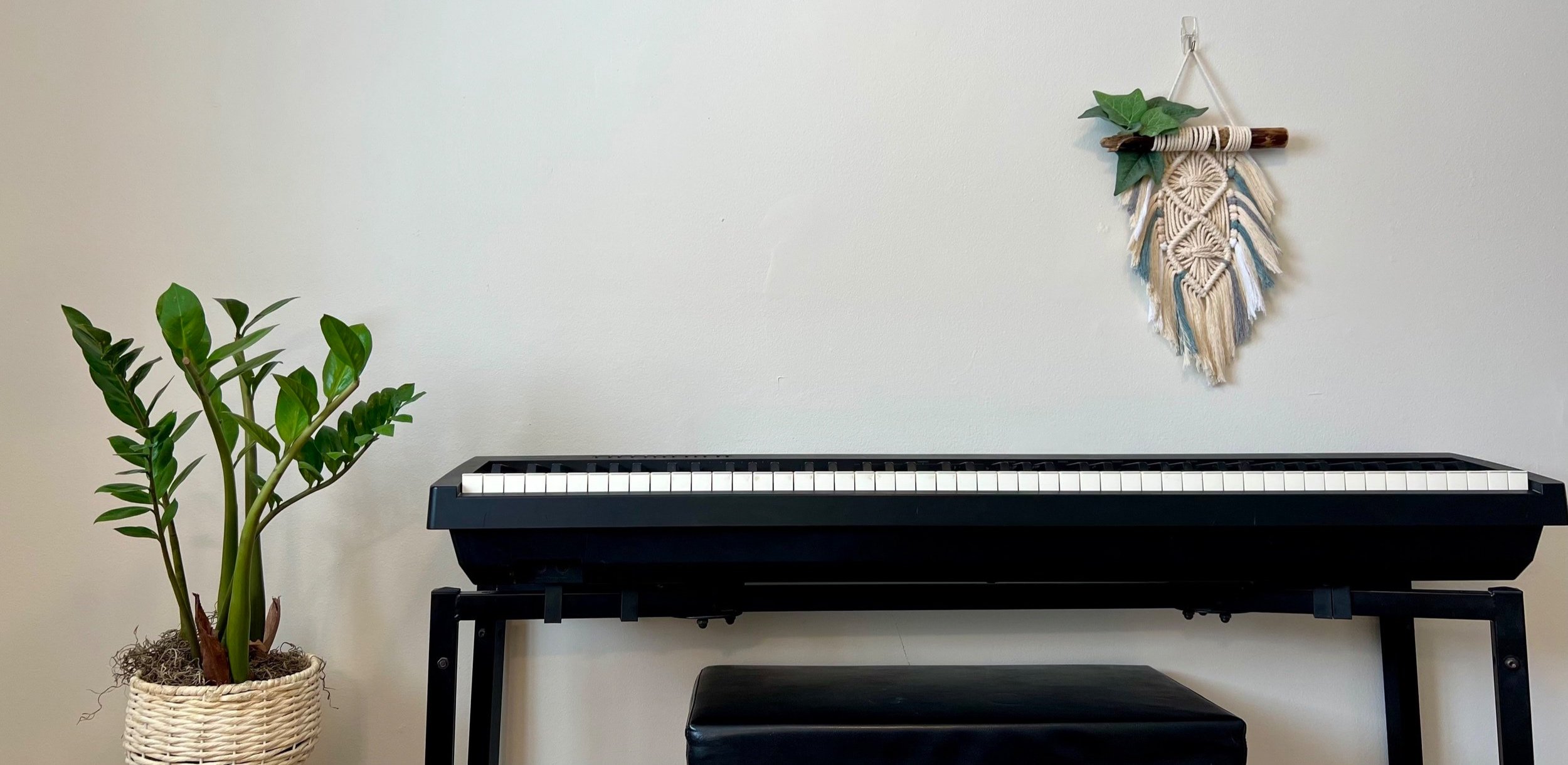
You learn from your own piano. You save hours every week on commuting.
The teaching is just as hands-on, with real-time feedback, screen sharing, and duet playing.
Frequently Asked Questions
-
Start with a drop-in session or attend a studio event first. You don't have to commit to weekly lessons until you're ready.
-
An acoustic piano or 88-key weighted digital piano, a device with a camera and microphone (laptop, tablet, or phone), and a stable internet connection. Becky will walk you through the rest during setup.
-
Yes. Becky works with students of all ages who are ready for structured, goal-oriented learning. If your child wants a fun challenge, work toward exams, and build future music skills, this studio is a great fit.
-
Many of Becky's students come from lessons that felt aimless or frustrating. The difference here is structure. You always know what you're building and why each week matters.
-
Most students notice improvement within the first month. Real skill, the kind that compounds, becomes clear within 6-12 months of consistent work.
Plateau’s along the way are normal, progress is not a straight line!
-
Yes. Music students care about is part of the learning here. Favourite songs, film scores, and video game music are often brought into lessons, not as a reward, but as a way to build real skills. Becky uses that music to work on things like reading, rhythm, technique, and expression, so progress stays meaningful while the material stays motivating.
-
Foundational chording and improv are part of each student’s education, from beginners to advanced players.
We dig deeper for students who are interested. That can mean simple creative exploration, learning to improvise with chords, singing and playing pop songs, learning totally by ear, or developing more advanced skills over time.
You don’t need any prior experience. Improvisation is treated as a way to understand music more deeply, not as something separate from learning piano well.
-
Yes, but always by choice. Students are invited to optional online studio events like open mics, workshops, and informal performances. These are designed to feel supportive and low-pressure, helping students get comfortable sharing music without the stress of formal recitals unless that’s something they want.
-
Yes. Lessons can include chording, accompaniment patterns, playing from lead sheets, and skills for playing with other musicians. This is especially helpful for students interested in pop, contemporary music, or accompanying singers and ensembles.
-
No. The approach is structured, but not rigid. Students always know what they’re working toward, which actually makes playing more enjoyable. Having direction tends to reduce frustration and build confidence, so enjoyment grows alongside skill instead of being pushed aside.