


People come to live music because they want to
feel something.
They want to arrive, settle in, and let the evening hold them for a while.
When the music is right, it does more than sound good. It changes the atmosphere of the room and how people experience being there together.
That’s what Becky Reesor creates.
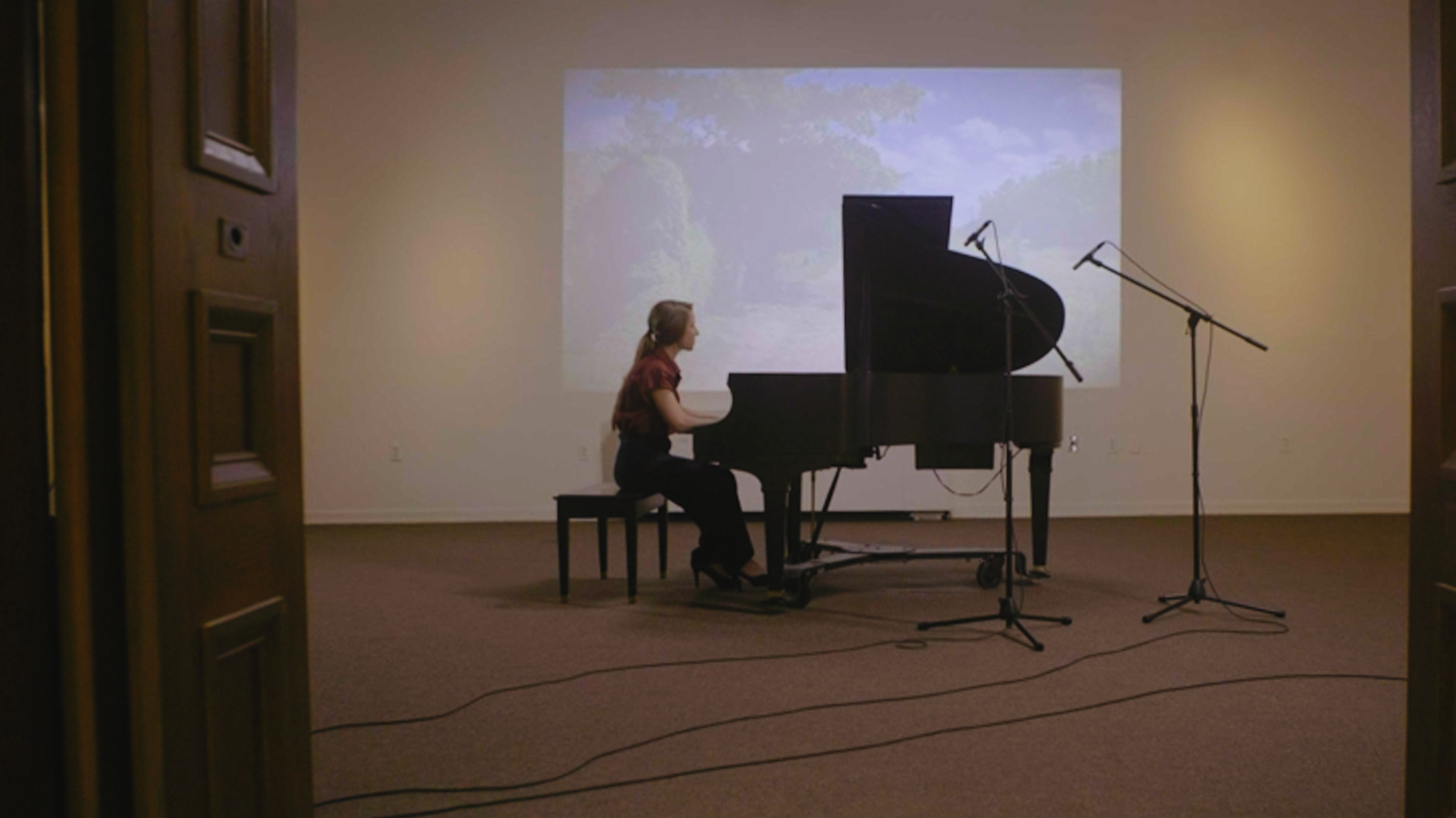
When Becky performs, the music feels woven into the space.
The room softens. The pace eases. People stop bracing and start listening with their whole bodies, not just their ears. The sound doesn’t compete with conversation or attention. It supports the moment and gives it shape.
Guests often say they leave feeling calmer or lighter than when they arrived. Not because anything dramatic happened, but because the music made it easier to be present. What stays with them isn’t just a melody. It’s the feeling of having been held by the experience.
Becky Reesor is a Canadian pianist, composer,
and educator.
She holds a Master’s degree in piano performance from McGill University and has built a career that spans performance, composition, and teaching.
Her work has taken her across Canada, the UK, and Mexico, performing in concert halls, festivals, arts centres, historic churches, and more intimate settings. Moving between these environments has shaped how she approaches music, not as something that stands apart from a space, but as something that supports and shapes how people experience it.

She is examiner and adjudicator with the Canadian National Conservatory of Music, an institution which strengthens her dedication to cultivating lives of music with her students.
She has also been Iona Abbey’s Director of Music, the multidisciplinary arts community in Scotland. That work seeded her formal projects and deepened her understanding of how music functions within shared experience.
LOGOS GO HERE
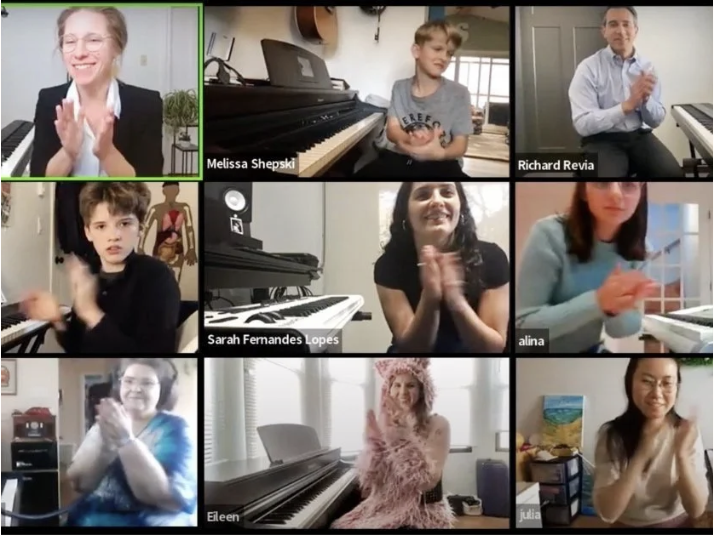
Becky works with people who care about music and want to keep growing as players.
Many come to her ready to deepen their playing and looking for guidance that helps them move forward while still enjoying the process. They want to play music they love and develop the ability to shape and create it for themselves.
Her teaching balances challenge with support. Lessons have clear direction without feeling rigid, and students know what they’re working toward. Progress matters, but it’s built through interest and engagement, not pressure. As students improve, confidence grows alongside their skills because the work feels purposeful and satisfying.
Over time, students begin to develop their own musical voice. The piano becomes a place where they feel capable and expressive, and their playing reflects both solid skill and personal intention.
What stays after the music ends—
Whether Becky is at the piano in a performance or working with a student, the feeling is the same.
Music creates space. It slows things down. People leave feeling clearer than when they arrived.
That’s what stays with them.